.svg)
Tummy Tuck (Abdominoplasty): Types, Muscle Repair, Scars, Recovery and the Things Clinics Leave Out
What a tummy tuck can change, what it cannot, how the type is chosen, and why it is a bigger operation than it sounds.
A tummy tuck, or abdominoplasty, removes loose skin and fat from the abdomen and, in most cases, repairs abdominal muscles that have separated. It is performed under general anaesthesia. Most patients return to desk work at around two weeks and to full exercise at four to six weeks, with core exercises reintroduced later. The final result settles over six to twelve months, and the scar takes a year or more to mature.
It is one of the most transformative body operations after pregnancy or major weight loss. It is also one of the most serious operations in aesthetic surgery. The scar runs from hip to hip, recovery is real, and the risk of blood clots is higher than for most cosmetic procedures. This guide covers what it involves, which type you need, and what is usually left off the brochure.
What a tummy tuck is — and what it cannot do
Pregnancy and significant weight change do three things to the abdomen that diet and exercise cannot reverse. The skin stretches and does not contract back. Stretch marks form in the lower abdomen. And the two vertical abdominal muscles (the rectus muscles) pull apart from each other, a condition called diastasis recti. It leaves a bulge that no amount of training will flatten.
A tummy tuck addresses all three. The loose skin and the fat beneath it are removed, together with the stretch marks on that skin. The separated muscles are stitched back together, tightening the abdominal wall from within. The remaining skin is drawn down and closed with a low scar, and the belly button is brought out through a new opening in the skin.
A tummy tuck is not a weight-loss operation. It removes a limited amount of fat, and the result is planned around the body you have on the day. It does not remove stretch marks above the belly button; they remain, and they usually move lower. It does not treat fat inside the abdomen, around the organs, which gives a firm, rounded belly and does not respond to surgery. It does not remove cellulite, and it does not protect the result from later pregnancy or weight gain.
And it is not scarless. The scar is placed low, where underwear or a bikini covers it, but it is long.
Why people consider it
After pregnancy. Loose skin, a lower-abdominal pouch and muscle separation that has not recovered with exercise. This is the most common reason.
After major weight loss, by diet, rapid weight loss following the use of GLP-1 receptor agonists or after bariatric surgery. Skin hangs over the waistband or the belly button, sometimes with skin irritation and rashes in the fold beneath.
An overhanging C-section scar. A pouch of skin and fat above an old caesarean scar. The tummy tuck scar is placed at or below it, and the old scar is usually removed.
Muscle separation with an umbilical hernia, which can be repaired in the same operation.
Ageing, with loss of skin elasticity on the abdomen.
Tummy tuck or liposuction?
Firm skin, excess fat, muscles intact — liposuction. It removes fat, and the skin contracts onto the new contour.
Loose skin, muscle separation, or both — a tummy tuck. Only removing skin tightens skin that has lost its elasticity, and only a muscle repair corrects separated muscles.
Loose skin and excess fat — a tummy tuck, often with conservative liposuction of the flanks in the same operation.
Liposuction alone in an abdomen with loose skin removes the support underneath and can leave the skin looser and more irregular than before.
Types of tummy tuck
Mini tummy tuck. This treats only the lower abdomen, below the belly button. The scar is shorter, and the belly button is usually left where it is. It suits a small pouch of loose skin below the navel with firm skin and muscle above. It suits fewer people than ask for it. If the loose skin or the muscle separation extends above the navel, a mini tummy tuck leaves that untouched, and the result looks unfinished.
Full tummy tuck. The scar runs low across the abdomen from hip to hip, with a second scar around the belly button. The skin is lifted up to the ribs, the muscles are repaired along their full length, and the excess skin is removed. This is the standard operation after pregnancy. Patients who have not been pregnant and have good muscle tone can sometimes have the full tummy tuck without the muscle repair.
Extended tummy tuck. The scar continues further around the hips to treat loose skin on the flanks as well as the front. It suits patients with loose skin wrapping around the sides, most often after major weight loss.
Lower body lift. The scar continues all the way around the body, lifting the abdomen, flanks, buttocks and outer thighs together. It is a larger operation for major weight loss and is planned separately.
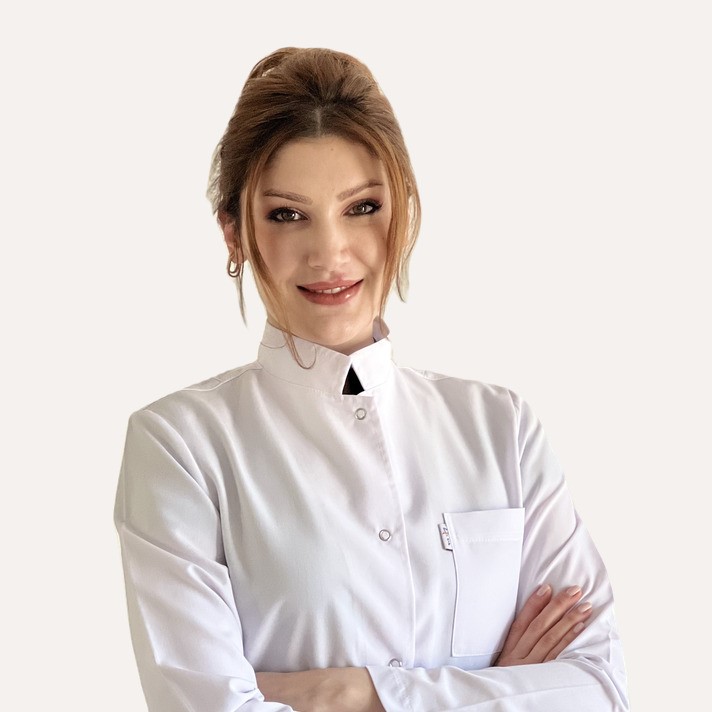
Why Dr. Feryal Yıldız Often Prefers an Extended Tummy Tuck
When it comes to abdominoplasty, Dr. Feryal Yıldız often prefers an extended tummy tuck for patients who require more comprehensive abdominal and waistline contouring.
Compared with a standard tummy tuck, the extended technique allows the treatment area to continue further toward the flanks. In appropriately selected patients, this can create a more complete transition between the abdomen, waist, and surrounding contours, contributing to a more balanced and harmonious silhouette.
For Dr. Yıldız, a successful tummy tuck is not simply about removing excess skin from the abdomen. The goal is to consider the torso as a whole and tailor the surgical plan to the patient’s anatomy, skin laxity, and desired outcome.
A standard tummy tuck or mini tummy tuck can be an excellent option for selected patients; however, these techniques address a more limited area and are therefore best suited to specific anatomical indications.
Ultimately, the choice between an extended tummy tuck, standard tummy tuck, and mini tummy tuck should be individualized. Careful patient selection and a thoughtfully designed surgical plan remain essential to achieving refined, natural looking body contouring results.
The scar and the belly button
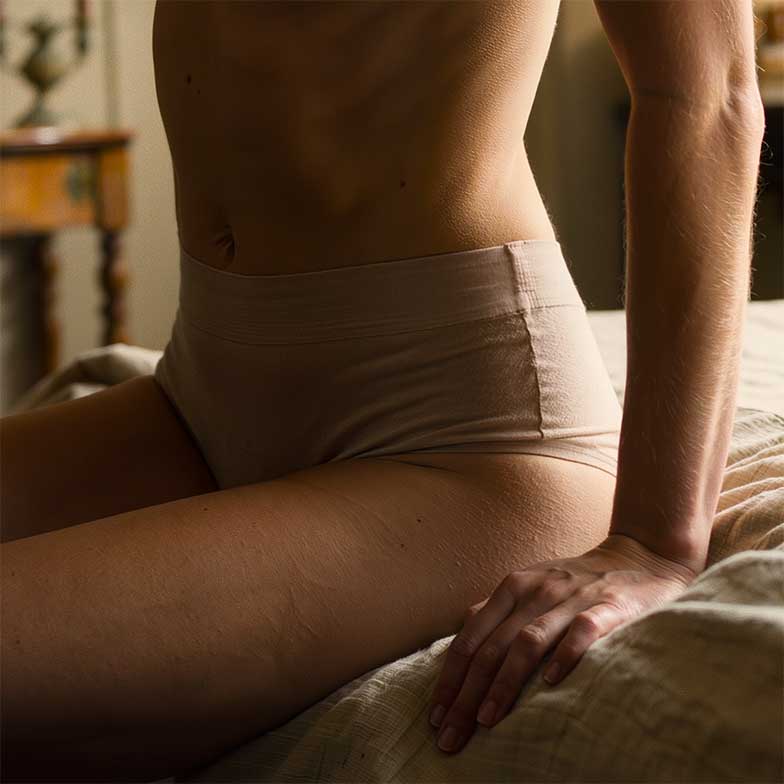
The scar is placed low, usually at or just above the pubic hairline, so that underwear or a bikini covers it. Bring the underwear or swimwear you want to wear to your consultation so the position can be planned around it. The scar is red and firm for several months, then flattens and fades over 12 to 18 months. It remains visible without clothing. A higher scar, or small bumps of skin at its ends ("dog ears"), are among the most common reasons for a touch-up.
The belly button stays attached to the abdominal wall in a full tummy tuck. It is brought out through a new opening in the tightened skin and stitched in place, leaving a small scar around or inside it. Its shape and position make a large difference to how natural the result looks. Ask to see examples.
The most important thing on this page: it is a major operation
A tummy tuck is often talked about as though it were a routine cosmetic procedure. It is not, and knowing that is what keeps it safe.
Blood clots. Among aesthetic operations, the tummy tuck carries one of the higher risks of deep vein thrombosis and pulmonary embolism. After the muscle repair, the abdomen is tight, you move less, and you breathe less deeply. Walking early and often, compression, and clot-prevention measures where indicated are essential, not optional.
Combining operations. Adding more procedures to the same session lengthens the time under anaesthetic and makes recovery harder. Some combinations need particular care:
- Aggressive liposuction of the abdomen and flanks can compromise the blood supply to the lifted abdominal skin, which travels through that fat. It raises the risk of skin and fat loss. Liposuction with a tummy tuck should be conservative.
- A Brazilian butt lift requires you to avoid sitting and lying on your back, while a tummy tuck requires you to keep off your front and not straighten fully. The two recoveries work against each other.
- Breast surgery combined with a tummy tuck ("mommy makeover") is common. Whether it is safe in one session depends on the total operating time and your health, and many surgeons stage it into two operations.
[TO CONFIRM — Dr Yıldız's approach to combining a tummy tuck with breast surgery or liposuction]
Weight and pregnancy. A tummy tuck is planned around your body on the day. A later pregnancy will stretch the muscle repair and the skin again, and the operation may need to be repeated. Significant weight gain has a similar effect.
Who this suits
Most patients are between their early thirties and mid-fifties, after pregnancy or weight loss, but the anatomy matters more than age. The requirements are:
- A stable weight, close to your goal. Losing a large amount after surgery leaves new loose skin, and gaining it stretches the result. Being significantly overweight also raises the risk of wound problems.
- Finished having children, ideally. Many surgeons will still operate before then, but a later pregnancy may undo part of the result.
- Not smoking. Nicotine reduces the blood supply to the abdominal skin and makes wound breakdown and skin loss considerably more likely. Stop well before and after surgery, as instructed.
- Good general health. Conditions such as diabetes should be well controlled. After bariatric surgery, nutrition matters: healing needs protein, iron and vitamins.
- Realistic expectations. A flatter, firmer abdomen, in exchange for a long scar and a real recovery.
Who this does not suit
[TO CONFIRM — Dr Yıldız's own exclusion criteria, written in the first person: "I would not operate if…"]
The operation and the first weeks
The operation is performed under general anaesthetic. [TO CONFIRM — Dr Yıldız's typical operating time, hospital stay, and whether drains are used]
After surgery, the abdomen feels very tight, especially after a muscle repair. You will walk slightly bent forwards for the first week or two, because standing fully upright pulls on the repair and the wound. Pain is usually moderate and controlled with painkillers. Getting in and out of bed is the hardest part at first: roll onto your side and push up with your arms rather than using your abdominal muscles.
After surgery:
- Walk short distances from the first day, several times a day, to protect against blood clots.
- Wear your compression garment as instructed, usually for several weeks.
- Sleep on your back with your upper body raised and your knees slightly bent.
- Do not lift anything heavy, and avoid straining, including when coughing or opening your bowels.
- Keep the wounds clean and dry as instructed, and avoid baths, swimming pools and the sea until they are fully healed.
- Eat a diet rich in protein, and drink plenty of fluids.
- Do not smoke.
- Report promptly any wound opening, discharge, spreading redness, fever, one-sided leg swelling or pain, chest pain or breathlessness.
[TO CONFIRM — how long Dr Yıldız asks patients to wear the compression garment]
The recovery timeline
Days 1–3. Tightness and discomfort are at their peak. You walk bent forwards, with help, several times a day.
Week 1. You are more mobile and standing a little straighter. The wounds are reviewed, and drains, if used, are often removed around this time.
Weeks 1–2. Most people are nearly upright. Desk work resumes at around two weeks.
Weeks 2–6. Light activity and walking build up gradually. Compression continues, and there is still no lifting or abdominal exercise.
Weeks 4–6. Full exercise resumes when you have been cleared, except for core exercises.
Around 3 months. Core exercises such as sit-ups and planks resume, if cleared. After a muscle repair, some surgeons ask you to wait longer.
Months 6–12. Swelling fully settles, and the final contour appears. Numbness of the lower abdomen gradually improves, though some can remain.
Months 12–18. The scar matures and fades.
How long it lasts
The skin that is removed does not come back, and a well-done muscle repair holds. For most people the result is long-lasting. What changes it is you: pregnancy, weight gain and ageing all continue to affect the abdomen. A stable weight and regular exercise, once cleared, are the best protection.
Risks and complications
No operation is risk-free, and a page that leaves this section out is not worth trusting. The recognised risks of a tummy tuck include:
Seroma. A collection of fluid under the skin is the most common complication after a tummy tuck. It may need draining, sometimes more than once.
Haematoma. A collection of blood can require a return to theatre.
Delayed wound healing. Small areas of wound separation are most common at the centre of the scar, where tension is highest.
Skin or fat necrosis. Part of the skin or the fat beneath it can lose its blood supply. The risk is higher in smokers, with aggressive liposuction and with high tension.
Infection, at the wound or around a drain.
Scarring. The scar can widen, become raised or darker than expected, or form a keloid. It can also sit higher than planned, and there can be small bumps of skin ("dog ears") at its ends.
Belly button problems, in shape, position or healing.
Numbness. Reduced sensation in the lower abdomen is common. It usually improves over months but can be partly permanent.
Asymmetry and contour irregularities, or residual loose skin.
Recurrence. Laxity or muscle separation can return, especially after pregnancy or weight gain.
Blood clots (deep vein thrombosis and pulmonary embolism). They are uncommon but serious, and a tummy tuck carries a higher risk than most cosmetic operations.
Further surgery, for any of the above.
Anaesthetic risks, as with any general anaesthetic.
If you are travelling to Istanbul for surgery
Patients come to us from the UK, Ireland, Germany, France, the Gulf and elsewhere. Travelling for surgery is a reasonable decision, and a tummy tuck needs careful travel planning.
Assessment. Skin laxity, muscle separation, fat distribution, scars from previous surgery and your weight history decide the type of tummy tuck. They cannot be judged reliably from photographs. Expect an in-person examination before your plan is finalised.
How long to stay. Plan to stay until you can walk nearly upright, any drains are out and your wounds have been reviewed. This is typically around two weeks, not days. [TO CONFIRM — Dr Yıldız's recommended length of stay in Istanbul]
Flying and clot risk. A tummy tuck and a long flight each raise the risk of deep vein thrombosis, and together they compound it. Wear your compression garment, walk the aisle regularly, stay hydrated, and follow any clot-prevention advice you are given. Know the warning signs: one-sided leg swelling or pain, chest pain, or breathlessness need emergency care.
Travel comfort. Sitting upright for a long time and lifting luggage are both difficult in the first weeks. Allow extra time, and arrange help.
Aftercare at home. Arrange who will review your wounds and manage any seroma once you are home. Health systems in your home country are generally under no obligation to provide routine aftercare or revision for private surgery performed abroad, though they will treat a genuine emergency.
Revision terms in writing. Agree in advance what happens if a complication or an unsatisfactory result needs further surgery: who performs it, where, and who pays. Get it in writing before you pay a deposit.
Recovery, not a holiday. Sightseeing, sun on the scar and long days on your feet are the wrong way to spend the first fortnight.
Your records. Take home your operation note and your discharge instructions.
Choosing a surgeon
Check the qualification, not the adjective. Ask which specialist register the surgeon is on, in which country, and verify it independently.
Ask whether you need a mini, full or extended tummy tuck, and why. Be cautious if a mini is offered for loose skin that extends above the belly button.
Ask whether your muscles will be repaired, and how.
Ask where the scar will sit. Ask to see it marked on your body, and bring the underwear you want it to fit under.
Ask how they prevent blood clots, and what they will and will not combine in one operation.
Ask who will be operating on the day.
Be wary of pressure. Time-limited pricing, a decision expected on the day, or surgery packaged with sightseeing all suggest that commercial priorities come before clinical ones.
Frequently asked questions
What is the difference between a tummy tuck and liposuction?
Liposuction removes fat and relies on the skin contracting afterwards. A tummy tuck removes loose skin and repairs separated muscles. If your skin is loose or your muscles have separated, liposuction alone will not give a flat result.
What is the difference between a mini and a full tummy tuck?
A mini treats only the area below the belly button, with a shorter scar. A full tummy tuck treats the whole abdomen, repairs the muscles along their full length and repositions the belly button. Many people who ask for a mini need a full tummy tuck.
Will a tummy tuck fix muscle separation (diastasis recti)?
Yes. The separated muscles are stitched back together as part of a full tummy tuck, which flattens the bulge that exercise cannot.
Will it remove my stretch marks?
Only those on the skin that is removed, usually the ones below the belly button. Stretch marks higher up remain and usually move lower.
Can it remove my C-section scar?
Usually, yes. The tummy tuck scar is placed at or below the old scar, and the old scar is usually removed with the excess skin.
Where will the scar be?
Low across the abdomen, from hip to hip for a full tummy tuck, positioned to sit under underwear or a bikini. There is also a small scar around the belly button.
How long does recovery take?
Most people return to desk work at around two weeks and to full exercise at four to six weeks. Core exercises come later, and the final result settles over six to twelve months.
Is a tummy tuck painful?
It is one of the more uncomfortable cosmetic operations, mainly because of tightness after the muscle repair. The pain is controlled with painkillers and improves steadily over the first two weeks.
Can I get pregnant after a tummy tuck?
Yes, pregnancy after a tummy tuck is safe, but it will likely stretch the skin and the muscle repair again, and the tummy tuck may need to be repeated. It is best to wait until you have finished having children.
Do I need to reach my goal weight first?
Yes. Being stable and close to your goal gives a better and safer result. Further weight loss afterwards leaves new loose skin.
Can a tummy tuck be combined with other procedures?
Yes. Conservative liposuction of the flanks and a hernia repair are commonly included. Combining with breast lift or breast augmentation is possible in suitable patients, but many surgeons stage it into two operations for safety. After major weight loss, it is often part of a plan with a thigh lift and other procedures across more than one operation.
Arranging a consultation
If you are considering a tummy tuck, the useful next step is a proper assessment. That means an examination of your skin, muscles and fat, an honest answer to whether you need liposuction, a mini, a full or an extended tummy tuck, and a clear explanation of where the scar will sit. It also means a recovery plan that includes blood-clot prevention and aftercare.
You are welcome to contact the clinic to arrange a consultation with Op. Dr. Feryal Yıldız. There is no obligation to proceed, and you should not be asked to decide on the day.