.svg)
Breast Augmentation: Implants, Placement, Recovery and the Things Clinics Leave Out
What breast augmentation can change, what it cannot, how implant choice is actually made, and why implants are not lifetime devices.
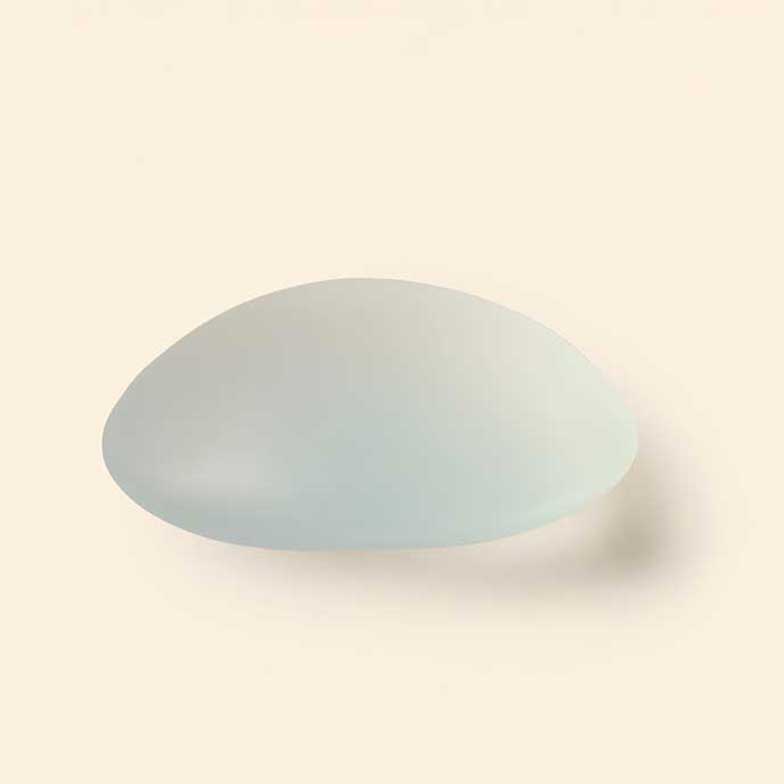
Breast augmentation increases breast volume and improves shape using a silicone or saline implant. It is performed under general anaesthetic, and most patients are back at desk work within about a week and back to unrestricted exercise at six weeks. Final shape settles at four to six months.
It is the most requested aesthetic operation in the world and one of the most poorly explained. Most pages about it describe the result and skip the decisions — implant type, size, profile, where it sits, where the incision goes — and almost all of them skip the part where implants eventually need attention. This guide covers all of it, including the parts that are less comfortable to read.
What breast augmentation is — and what it cannot do
An implant is a volume device. Placed beneath the breast tissue or beneath the chest muscle, it increases size, improves projection, and can correct a visible difference between the two sides. Modern planning is not only about volume: nipple position, the symmetry of the tissue and the proportion of the implant to your chest are all part of the decision.
An implant does not lift the breast. This is the single most common misunderstanding about the operation, and it causes more disappointment than any other. An implant adds volume behind the breast; it does not raise a nipple that has descended below the breast crease. A breast that has lost its position after pregnancy, breastfeeding or weight loss needs a lift — a mastopexy — either instead of an implant or together with one. An implant placed in a breast that needed lifting produces a larger breast in the same low position, and frequently a worse shape than before.
It also does not correct significant asymmetry of the chest wall, it does not remove stretch marks, and it does not improve skin quality. And it is not a permanent, one-time operation — see The most important thing on this page, below.
An honest assessment will tell you which of these you actually need, and that assessment can only be made by examining you.
Why people consider it
The reasons cluster into four, and knowing which is yours changes the plan:
- Genetics. Breasts that have always been small, where the aim is fuller proportion rather than change.
- Weight change. Rapid or significant weight loss leaves breast tissue deflated, and the skin does not always contract with it.
- After pregnancy and breastfeeding. Volume is lost and the tissue loosens. This group most often needs a lift as well as, or instead of, an implant.
- Asymmetry. A visible size or shape difference between the two sides, which is extremely common and correctable — sometimes with two different implants, sometimes with an implant on one side only.
The first two groups are usually straightforward augmentations. The third is the group most often sold the wrong operation.
Choosing an implant
Four decisions are made together, and none of them is made by picking a cup size.
Saline or silicone. A saline implant is a silicone shell filled with sterile salt water once it is in place. If it leaks, the fluid is harmlessly absorbed and the deflation is immediately obvious — but it tends to feel firmer and is more prone to visible rippling in thin patients. A silicone implant is pre-filled with a cohesive gel that behaves much more like breast tissue and is what most patients and most surgeons prefer. Its disadvantage is the mirror image of saline's: a rupture is often silent, which is why imaging surveillance is recommended.
Round or anatomical. Round implants give more upper-pole fullness. Anatomical, or teardrop, implants have more volume in the lower half and a sloped upper edge, which suits patients who want the result to be hard to identify as surgical. Anatomical implants must stay oriented correctly, and rotation is a recognised problem specific to them.
Profile. For any given volume, an implant can be made wide and flat or narrow and projecting. Profile is chosen from the width of your chest and the width of your existing breast footprint — an implant wider than your breast base will sit visibly outside it.
Volume. The honest version of this conversation is measurement, not aspiration. Your chest wall measurements, the amount of breast tissue you already have, and your skin elasticity determine the range of implants that will work on your body. Choosing beyond that range is how patients end up with visible implant edges, thinned tissue over the top of the implant, and a result that reads as obviously artificial.
A surgeon who agrees to whatever size you ask for without measuring you is not planning; they are taking an order.
Where the implant sits
Under the breast tissue (subglandular). Suits patients who already have enough breast tissue to cover the implant. Shorter recovery, no interference with the chest muscle, but the implant edge is more likely to be visible or palpable if your tissue is thin.
Under the chest muscle (submuscular). Suits patients with less natural breast tissue. The muscle adds a layer of cover over the top of the implant, which produces a more natural slope and a lower rate of capsular contracture. It is more uncomfortable in the first week, and it carries one specific drawback — animation deformity, where the implant visibly moves when the chest muscle contracts.
Dual plane, a hybrid where the upper part of the implant sits under the muscle and the lower part under the tissue, is very widely used because it takes most of the advantage of each.
Your tissue thickness, measured at consultation, is what decides this — not preference.
Where the incision goes
Inframammary (in the breast crease). The most used approach worldwide. It gives the most direct access and the most control over the implant pocket, and the scar sits in the fold where a bra sits. It is visible if you are lying down or lifting the arm overhead.
Periareolar (around the nipple). The scar hides in the colour change at the edge of the areola and heals inconspicuously in many people. It carries a higher risk of altered nipple sensation and, on the evidence, a somewhat higher rate of capsular contracture, because the incision passes through breast tissue and its bacteria.
Transaxillary (through the armpit). Leaves no scar on the breast at all, which is why patients often ask for it. The trade-off is less direct control over the lower part of the pocket, and if a revision is ever needed it is generally done through a new incision on the breast.
Her page notes that the axillary approach is frequently preferred because it minimises visible scarring. That is a legitimate position, and it should still be a discussion rather than a default — the right incision depends on your implant choice, your anatomy and how much you weight scarring against pocket control.
Augmentation, lift, or both
This is the decision that most often goes wrong, so it is worth arriving at your consultation understanding it.
- Augmentation alone — for a breast that has lost volume but not position. The nipple still sits at or above the breast crease.
- Breast lift (mastopexy) alone — for a breast with enough volume but a descended nipple and loose skin. It repositions; it does not enlarge.
- Augmentation with a lift — for a breast that has lost both. A longer operation with more scarring, and the correct answer for a great many post-pregnancy patients.
- Fat transfer — moves your own fat into the breast. It gives a modest increase, a soft result and no implant, but the volume gain is limited, some of the transferred fat is reabsorbed, and it usually needs more than one session.
A surgeon who offers an implant for every breast is not assessing yours. If you are told you need a lift when you came in asking for implants, that is the more valuable answer, not an upsell.
Who this suits
There is no fixed upper or lower age limit, but the operation is appropriate for women whose physical development is complete. From the late twenties onwards, when body shape has settled, results are more predictable.
Beyond that, the requirements are unremarkable: general health that permits a general anaesthetic, no untreated breast condition, and no smoking — or a willingness to stop well before and after surgery, because nicotine impairs wound healing and raises the risk of infection and implant loss.
Realistic expectations matter more than any of it. An implant changes the size and shape of your breast. It does not change the rest of your body, and it will not settle a question about how you feel about yourself if that question was not really about your breasts.
If you are planning a pregnancy, it is worth saying so. Pregnancy and breastfeeding change the breast again, and many surgeons will suggest waiting.
Who this does not suit
Dr. Feryal Yıldız considers realistic expectations essential when selecting patients for breast augmentation. She does not recommend proceeding with surgery when a patient’s expectations cannot be safely or realistically achieved through breast implants or other available techniques.
For Dr. Yıldız, successful breast augmentation begins with honest communication — understanding what surgery can achieve, recognizing its limitations, and creating a result that respects the patient’s anatomy and natural body proportions.
The operation and the first weeks
The operation is performed under general anaesthetic.
A feeling of pressure and tightness across the chest in the first few days is normal and expected, and is more pronounced when the implant has been placed under the muscle. Mild pain during the first week is normal and is controlled with ordinary painkillers.
After surgery:
- Wear the supportive bra you are given, for as long as you are told to — this is not optional, and it affects where the implant settles
- Avoid lifting anything heavy and avoid straining the arms
- Avoid intense exercise for the first several weeks
- Sleep on your back, elevated, rather than on your front or side
- Keep the incisions out of direct sunlight while they are healing
- Follow the post-operative instructions you are given, on the schedule you are given
The recovery timeline
- Days 1–3 — Pressure, tightness and swelling at their peak. Rest. Arm movement kept to a minimum.
- Week 1 — Discomfort easing. Most people are back at desk work at about one week.
- Weeks 1–2 — Arm movements still restricted. Light daily activity, nothing strenuous.
- Weeks 2–6 — Light activity building up gradually, on your surgeon's advice. Swelling visibly reducing.
- Week 6 — Full exercise, unrestricted, when cleared.
- Months 3–6 — The tissue relaxes and the implants settle into their final position and shape. Full integration of the implant with the surrounding tissue generally takes three to six months.
- Up to 1 year — Scars mature and fade.
The breasts sit high and firm in the early weeks and look nothing like the final result. They drop and soften over months. This is expected, and it has a name surgeons use — "drop and fluff".
The most important thing on this page
Breast implants are not lifetime devices.
You will read the opposite, including in the form "they don't need removing unless something goes wrong". That is half true and it misleads people. The accurate position is this: there is no fixed expiry date and no evidence that a well-functioning implant should be replaced on a schedule — but the longer an implant is in place, the higher the chance that it will need attention at some point, and a meaningful proportion of women who have augmentation will have a further operation in their lifetime.
Silicone rupture is usually silent. You will not feel it and it will not change how the breast looks. That is why the FDA recommends imaging surveillance for asymptomatic patients with silicone implants — ultrasound or MRI at five to six years after surgery, and every two to three years after that. Saline rupture, by contrast, is obvious immediately, because the breast deflates.
Plan for this as part of the decision, not as a surprise later. Ask at consultation what your surgeon's surveillance recommendation is, what a replacement would involve, and what it would cost.
After breast augmentation with implants, Dr. Feryal Yıldız recommends regular long-term follow-up. For patients without symptoms, her preferred protocol includes a breast MRI every two years to evaluate implant integrity and surrounding breast tissue.
If a patient develops any new symptoms, discomfort, changes in breast shape or other concerns, Dr. Yıldız recommends further evaluation without waiting for the routine follow-up interval, with MRI when clinically indicated.
For her, breast augmentation care does not end with surgery — long-term surveillance is an essential part of responsible implant care.
Risks and complications
No operation is risk-free, and a page that omits this section is not worth trusting. The recognised risks of breast augmentation include:
- Capsular contracture — the body forms a capsule of scar tissue around every implant. In some women that capsule tightens, making the breast firm, distorted in shape and sometimes painful. It is the most common reason for further surgery after augmentation, and correcting it means returning to theatre.
- Implant rupture — silicone rupture is usually silent and detected on imaging; saline rupture deflates the breast visibly. Either requires replacement.
- Rippling and palpable edges — visible wrinkling or a feelable implant border, most common in thin patients, in subglandular placement and with saline implants.
- Altered nipple sensation — increased, reduced or lost. Usually temporary; occasionally permanent. Higher with the periareolar incision.
- Malposition, bottoming out and symmastia — the implant sitting too low, too high, too far to the side, or the two pockets meeting in the middle. All require revision surgery to correct.
- Animation deformity — visible movement or distortion of the implant when the chest muscle contracts. Specific to submuscular placement.
- Rotation — of anatomical (teardrop) implants, which changes the shape of the breast and needs correcting.
- Asymmetry — no two breasts are identical before surgery and they will not be identical after it. A degree of difference is normal and persists.
- Infection — uncommon, but infection around an implant can mean the implant has to be removed and replaced at a later date.
- Haematoma and delayed healing — uncommon, but can require a return to theatre.
- BIA-ALCL — a rare lymphoma of the tissue around the implant, associated predominantly with textured implant surfaces. It is rare, and it is generally treatable when identified early. Any new swelling or fluid collection years after surgery should be assessed rather than ignored.
- Breast implant illness — a set of systemic symptoms some women report and attribute to their implants. The research position is unsettled; what is reasonable is that your surgeon takes the question seriously and discusses removal honestly rather than dismissing it.
- Effect on breast imaging — implants can obscure part of the breast on a mammogram. Tell the radiographer you have implants; additional views are used.
- Further surgery — revision for any of the above, or for a change in your own preferences over time.
- Anaesthetic and thrombosis risks — as with any general anaesthetic.
Breastfeeding
Performed with the right technique, breast augmentation does not generally prevent breastfeeding. Most women who have implants and later want to breastfeed are able to.
The honest qualifications: the periareolar incision carries more risk to the milk ducts and to nipple sensation than the inframammary or axillary approaches, and no surgeon can guarantee breastfeeding for any individual woman, with or without surgery. If you intend to breastfeed in future, say so at consultation — it is a reason to choose one incision over another.
How long it lasts
With the right implant chosen for the right body, the aesthetic result lasts many years. What changes around it is you: pregnancy, breastfeeding, weight change and ordinary ageing all continue to alter the breast, and the implant does not prevent any of them.
The implant itself needs monitoring rather than a scheduled replacement, as set out above. A realistic expectation is a result that holds its shape for a long time and a probability — not a certainty — of further surgery at some point in your life.
If you are travelling to Istanbul for surgery
Patients come to us from the UK, Ireland, Germany, France, the Gulf and elsewhere. Travelling for surgery is a reasonable decision made by a great many people, and it is also a decision that needs more planning than surgery at home. The points below are the ones that cause problems when they are skipped.
Assessment. Chest wall measurements, breast base width, tissue thickness, skin elasticity and nipple position determine both your implant and whether you need a lift. None of this can be judged from a photograph, and the lift question in particular cannot. Expect an in-person examination before your plan is finalised.
Know what is being implanted in you. Ask for the manufacturer, the model, the volume and the profile, and ask for the implant cards and serial numbers before you leave. You will need them for the rest of your life, and any surgeon who cannot produce them is not one to proceed with.
How long to stay. Plan your return around the point at which you are fit to fly and your wounds have been reviewed, not around the flight price. For international patients undergoing surgery with Dr. Feryal Yıldız, we recommend staying in Istanbul for at least one week after the procedure to allow time for early recovery and postoperative follow-up.
Flying and clot risk. Surgery and long flights each raise the risk of deep vein thrombosis, and together they compound it. Follow the mobility and hydration advice you are given.
Aftercare at home. Routine post-operative care is part of treatment, not an optional extra. Before you travel, establish who will review your wounds and see you at six weeks. Health systems in your home country are generally under no obligation to provide routine aftercare or revision for private surgery performed abroad, though they will treat a genuine emergency. Do not build your plan on the assumption that they will.
Revision terms in writing. Agree in advance what happens if a complication or an unsatisfactory result requires further surgery: who performs it, where, and who pays. Get it in writing before you pay a deposit.
Recovery, not a holiday. Lifting luggage, long days on your feet and sun on healing scars are all the wrong way to spend the first fortnight. A surgical trip and a holiday are different things.
Your records. Take home your operation note, your implant cards and your discharge instructions.
Choosing a surgeon
Check the qualification, not the adjective. Ask which specialist register the surgeon is on, in which country, and verify it independently.
Ask to be measured. If implant size is discussed before anyone has measured your chest and breast base width, you are in a sales conversation.
Ask whether you need a lift. And be suspicious of a clear no if you have had children and your nipple sits at or below the crease.
Ask which implant, and why that one for you. Brand, model, shape, profile and volume — with a reason attached to each.
Ask about capsular contracture. Specifically: their rate, and what happens if it occurs. It is the complication most likely to bring you back.
Ask who will be operating on the day.
Be wary of pressure. Time-limited pricing, a decision expected on the day, or a package bundling surgery with sightseeing all indicate that commercial priorities sit ahead of clinical ones.
Frequently asked questions
Will an implant lift my breasts?No. An implant adds volume; it does not raise the nipple. If your breast has descended, you need a lift, with or without an implant.
Will I be able to breastfeed?Generally yes. Surgery performed with the right technique does not usually affect breastfeeding, though the periareolar incision carries more risk to the ducts. Tell your surgeon if you plan to breastfeed.
Will there be visible scars?Every incision leaves a scar, and all three approaches place it where it is concealed — in the breast crease, at the edge of the areola, or in the armpit. Scars fade considerably over the first year, and how they mature depends on your skin as much as on technique.
Do implants need to be replaced?There is no fixed expiry date, and a well-functioning implant does not need replacing on a schedule. But implants are not lifetime devices, silicone rupture is usually silent, and the FDA recommends ultrasound or MRI at five to six years and every two to three years thereafter. Regular follow-up is essential.
Saline or silicone?Silicone feels closer to natural breast tissue and is what most patients choose. Saline is safer if it ruptures and the rupture is immediately obvious, but it feels firmer and ripples more easily. The right answer depends on your tissue thickness as much as your preference.
How do I choose a size?From measurement — your chest wall dimensions, breast base width, existing tissue and skin elasticity — not from a cup size or a photograph. Those measurements define a range; within that range, preference decides.
Over or under the muscle?Under the muscle where there is little natural breast tissue to cover the implant; over the muscle where there is plenty. Dual plane combines both and is very widely used.
How long does recovery take?Light daily activity within a few days, desk work at about a week, unrestricted exercise at six weeks. Final shape at four to six months.
When will my breasts look normal?They sit high and firm at first and soften and settle over three to six months. Do not judge the result in the first month.
Will implants affect breast cancer screening?They can obscure part of the breast on a mammogram. Tell the radiographer you have implants and additional views will be used. Continue with routine screening as you otherwise would.
Can it be combined with other procedures?Frequently — a breast lift most commonly, and body procedures in the same session where it is safe to do so.
Arranging a consultation
If you are considering breast augmentation, the useful next step is a proper assessment: measurement of your chest and breast dimensions, an honest discussion of whether an implant alone will give you what you want, a clear explanation of the implant being proposed and why, and a plan you can take away and think about.
You are welcome to contact the clinic to arrange a consultation with Op. Dr. Feryal Yıldız. There is no obligation to proceed, and you should not be asked to decide on the day.