.svg)
Liposuction: Fat, Skin, Techniques, Recovery and the Things Clinics Leave Out
What liposuction can change, what it cannot, why your skin decides the result, and how to recognise a safe plan.
Liposuction removes localised deposits of fat that do not respond to diet and exercise. A thin tube called a cannula is passed through incisions a few millimetres long. It is performed under general anaesthetic or, for small areas, local anaesthetic, and usually takes one to three hours depending on the number of areas. Most patients go home the same day or the next, return to desk work within a few days to a week, and wear a compression garment for four to six weeks. The final contour appears at three to six months.
It is the most commonly performed body operation, and it is often sold as something it is not. It is not a weight-loss operation, it does not tighten skin, and more fat removed does not mean a better result. This guide explains what liposuction really does, who it suits, and where it goes wrong.
What liposuction is — and what it cannot do
After puberty, the number of fat cells in the body stays roughly constant. Gaining and losing weight makes those cells larger or smaller rather than creating or removing them. That is why some areas, such as the lower abdomen, flanks, inner thighs or under the chin, keep their fat however carefully you diet: those areas simply contain more fat cells.
Liposuction removes fat cells from a chosen area permanently. The area becomes smaller and changes shape, and because there are fewer fat cells there, it is less likely to regain its old fullness.
Liposuction is not weight loss. The fat removed usually weighs only a few kilograms, and the result is measured in shape, not on the scales. There are safe limits to how much can be removed in a single operation. Larger volumes raise the risk of complications, so large cases are planned in stages.
Liposuction does not tighten skin. It removes fat from under the skin and relies on the skin to contract onto the new shape. It does not remove cellulite, and it can make it more visible if too much fat is taken. It does not treat fat inside the abdomen, around the organs, which gives a firm, rounded belly. And it does not repair separated abdominal muscles.
The most important thing on this page: your skin decides the result
The result of liposuction depends as much on the skin as on the fat.
Firm, elastic skin contracts smoothly over the reduced contour. This is the ideal situation, and it is common in younger patients and in those who have not had large weight changes.
Loose skin cannot contract enough. Removing the fat beneath it leaves it looser, more wrinkled and more hanging than before. In that situation the right operation removes skin: a tummy tuck for the abdomen, a thigh lift for the thighs, or an arm lift for the upper arms. Liposuction may be part of those operations, but it cannot replace them.
A surgeon should assess your skin with a pinch test and examination, not just your fat. If you are told liposuction will "tighten" loose skin, ask how.
The second rule is that more is not better. Removing too much fat, or removing it unevenly, causes the most common bad results: dents, ridges, waves and skin that sticks to the muscle underneath. These are much harder to correct than to avoid. A good result leaves a thin, even layer of fat under the skin and blends each treated area into the ones around it.
Why people consider it
Stubborn fat that persists despite a healthy weight and regular exercise.
Proportion, where one area, such as the hips, thighs or abdomen, is out of balance with the rest of the body.
A double chin, or fullness under the jaw.
The bra roll and back fat that show through clothing.
Men: the flanks ("love handles"), the abdomen, and enlarged male breasts (gynaecomastia), where liposuction is often part of the treatment.
Fat for transfer. The fat removed can be used to add volume elsewhere, for example in facial fat transfer.
Areas that can be treated
Chin and neck. Fat under the jaw, often under local anaesthetic. Good skin quality matters, and loose neck skin may need a neck lift instead.
Upper arms. Fat on the back of the arm. The skin here loosens easily, so this area needs a particularly careful technique, and loose skin may call for an arm lift.
Back and bra roll. The fat here is firmer and more fibrous and often needs more work.
Abdomen. Upper and lower. It suits firm skin with no muscle separation.
Flanks and waist. Often treated with the abdomen and back as "360" liposuction, for a continuous contour all the way around the torso.
Hips and outer thighs.
Inner thighs. The skin is thin and loose here, so it is treated conservatively.
Knees, calves and ankles. These are small, delicate areas with longer swelling.
Techniques
All modern liposuction begins by infiltrating the area with a solution containing a local anaesthetic and a medicine that constricts blood vessels. This is called tumescent infiltration. It reduces bleeding, bruising and pain.
The fat is then removed through small cannulas with suction. Variations include power-assisted liposuction, where the cannula vibrates to make fat removal easier and more even, and energy-assisted liposuction, where ultrasound, laser or radiofrequency is used to loosen fat, particularly in fibrous areas such as the back or in revision cases. Energy-based devices add a risk of burns and have not been shown to make skin tighten meaningfully more than standard technique. The surgeon's judgement and technique matter more than the device.
"High-definition" liposuction and "ab etching" aim to sculpt muscle definition. They suit only very lean patients, and over-etched results can look artificial and are difficult to reverse.
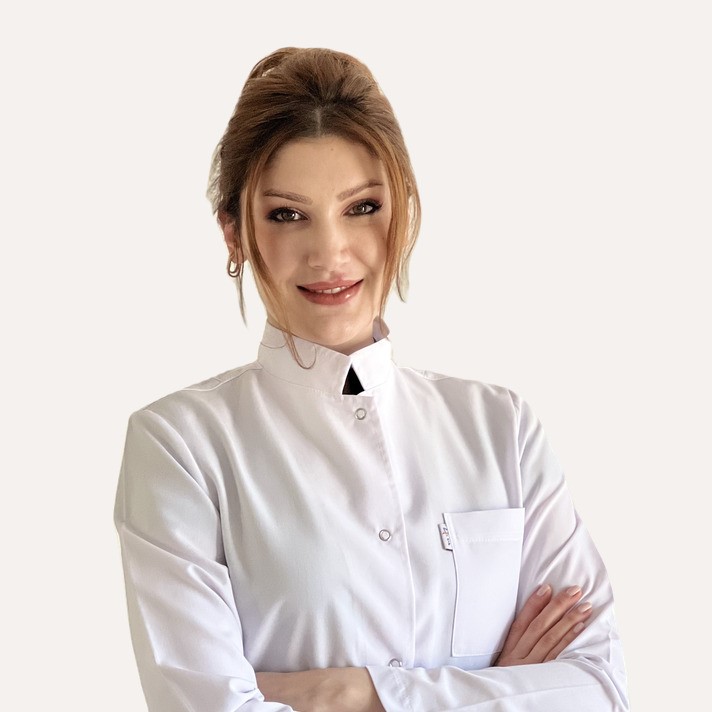
Dr. Feryal Yıldız uses ultrasonic liposuction to achieve precise, refined body contouring while respecting the natural proportions of the body.
When additional skin tightening is needed, she may combine ultrasonic liposuction with QuantumRF to address both excess fat and skin laxity within the same treatment plan.
Who this suits
Liposuction suits people who are at or close to a healthy weight, with firm, pinchable fat in specific areas and skin that is elastic enough to contract. You also need a stable weight, general health that permits the anaesthetic, and no smoking, or a willingness to stop well before and after surgery.
If you are significantly above a healthy weight, weight loss should come first. Liposuction is safer, and the result better, closer to your goal weight.
Realistic expectations matter most: a smaller, better-proportioned version of your own shape, not a different body.
Who this does not suit
Dr. Feryal Yıldız uses ultrasonic liposuction, combining it with QuantumRF skin tightening when additional skin contraction is indicated.
However, when skin quality is poor or significant skin laxity is present, energy-based skin tightening technologies may not provide sufficient contraction after liposuction. In these patients, liposuction alone may not achieve the desired contour, even when combined with an energy-based device.
Dr. Yıldız may therefore recommend combining liposuction with surgical skin removal or other body contouring procedures, depending on the degree and location of excess skin.
For her, choosing the right treatment means understanding when technology is enough — and when surgery is necessary.
The operation
Liposuction is performed under general anaesthetic, sedation or, for small areas, local anaesthetic. The treatment areas are marked while you are standing. Incisions of about three to five millimetres are placed in natural creases where possible. The operation usually takes one to three hours depending on the number of areas.
Most patients go home on the day of surgery or the next day. Larger procedures, or liposuction combined with other operations, need a longer stay.
[TO CONFIRM — Dr Yıldız's usual anaesthetic, criteria for an overnight stay, and any limits she sets on volume per session]
After surgery
The treated areas are swollen, bruised and sore, and many people compare the feeling to a hard workout. Fluid leaking from the small incisions in the first day or two is normal.
After surgery:
- Wear your compression garment day and night for as long as you are told, usually four to six weeks. It controls swelling and helps the skin settle smoothly.
- Walk from the first day, and regularly, to protect against blood clots.
- Drink plenty of water, and eat a protein-rich, low-salt diet to help control swelling.
- Keep the incisions clean and dry as instructed.
- Avoid strenuous exercise until you are cleared.
- Do not smoke.
- Follow your surgeon's advice on massage. Practice varies, and it should not be painful or aggressive.
The recovery timeline
Days 1–3. Soreness, swelling and bruising are at their peak. Rest, but walk several times a day.
Week 1. Discomfort is easing. Most people return to desk work within a few days to a week, depending on the number of areas.
Weeks 2–6. Swelling reduces gradually. Areas can feel firm, lumpy or numb for a few weeks, which is normal. Light exercise resumes as cleared, with the garment continued.
Weeks 4–6. Full exercise resumes, when you have been cleared.
Months 3–6. The remaining swelling resolves, and the final contour appears. Lower-leg areas take longest.
Up to 1 year. The small scars fade.
How long it lasts
The fat cells removed do not come back, so the result is long-lasting. It does not protect you from weight gain. If you gain weight, the remaining fat cells, both in the treated areas and elsewhere, will enlarge, and new fat tends to appear in areas that were not treated. A stable weight is what keeps the result.
Risks and complications
No operation is risk-free, and a page that leaves this section out is not worth trusting. The recognised risks of liposuction include:
Contour irregularities. Dents, ridges, waves and asymmetry are the most common unsatisfactory results, usually from over-aggressive or uneven fat removal. They are difficult to correct.
Loose skin remaining after the fat has gone, when the skin could not contract.
Prolonged swelling and firmness, sometimes for several months.
Numbness or altered sensation. It is usually temporary.
Seroma. A collection of fluid may need draining.
Bruising and haematoma.
Infection at an incision. It is uncommon.
Skin discolouration or visible incision scars.
Burns, with energy-assisted devices.
Blood clots (deep vein thrombosis and pulmonary embolism). They are uncommon but serious, and the risk rises with larger volumes and longer operations.
Fat embolism, fluid imbalance and anaesthetic toxicity. These are rare but serious, and they are why safe limits on volume and anaesthetic dose matter.
Injury to deeper structures, including the abdominal wall and internal organs. It is very rare, but it is why liposuction should be performed only by trained surgeons in properly equipped hospitals.
Further surgery, for any of the above.
Anaesthetic risks, as with any general anaesthetic.
Combining liposuction with other procedures
Liposuction is often combined with other operations, but some combinations need care.
With a tummy tuck. Conservative liposuction of the flanks is common. Aggressive liposuction of the abdomen in the same operation can compromise the blood supply to the lifted skin.
With fat transfer. The fat removed can be purified and transferred to the face, breasts or buttocks. Transferring fat to the buttocks (a "BBL") is a separate operation with its own specific and serious risks, and it should be discussed as one.
With breast surgery. Liposuction of the sides of the chest is often combined with a breast reduction.
The more that is combined, the longer the anaesthetic and the harder the recovery. Some plans are safer staged across two operations.
If you are travelling to Istanbul for surgery
Patients come to us from the UK, Ireland, Germany, France, the Gulf and elsewhere. Travelling for surgery is a reasonable decision, and it needs more planning than surgery at home.
Assessment. Fat distribution and skin quality decide whether liposuction is right and how much can be done. They cannot be judged reliably from photographs alone. Expect an in-person examination before your plan is finalised.
How long to stay. Plan your return around your review and your fitness to fly, not the flight price. For international patients undergoing surgery with Dr. Feryal Yıldız, we recommend staying in Istanbul for at least one week after the procedure to allow time for early recovery and postoperative follow-up.
Whenever possible, a longer stay is preferable, as it allows more time for recovery and in-person monitoring before returning home.
Flying and clot risk. Surgery and long flights each raise the risk of deep vein thrombosis, and together they compound it. Wear your garment on the flight, walk the aisle regularly and stay hydrated.
Garments. Bring or buy a second compression garment so one can be washed.
Aftercare at home. Arrange who will review you once you are home. Health systems in your home country are generally under no obligation to provide routine aftercare or revision for private surgery performed abroad, though they will treat a genuine emergency.
Revision terms in writing. Agree in advance what happens if a complication or an unsatisfactory result needs further treatment: who performs it, where, and who pays.
Your records. Take home your operation note, including the areas treated and the volume removed, and your discharge instructions.
Choosing a surgeon
Check the qualification, not the adjective. Ask which specialist register the surgeon is on, in which country, and verify it independently.
Ask whether your skin is suitable, and what would happen if it is not.
Ask how much they plan to remove, and what their limits are for one session.
Ask where the operation will take place. It should be a hospital or accredited facility with a qualified anaesthetist, not a treatment room.
Ask who will be operating on the day.
Be wary of "weight-loss" framing, "full body liposuction" in one session, and pressure. Time-limited pricing and a decision expected on the day suggest that commercial priorities come before clinical ones.
Frequently asked questions
Can liposuction help me lose weight?
No. It removes localised fat to improve shape, not body weight, and there are safe limits on how much can be removed at once. It works best close to your goal weight.
Will liposuction tighten loose skin?
No. Liposuction relies on your skin contracting by itself. If your skin is loose, removing fat can make it looser, and a skin-removing operation such as a tummy tuck or thigh lift is needed.
Is the fat gone permanently?
The fat cells removed do not come back. The remaining fat cells can still grow if you gain weight, in the treated areas and elsewhere.
What happens if I gain weight after liposuction?
The weight is stored in the remaining fat cells, often more noticeably in areas that were not treated. A stable weight protects the result.
Will there be scars?
Only small ones, a few millimetres long, placed in natural creases where possible. They fade over the first year.
How long does recovery take?
Most people return to desk work within a few days to a week and to full exercise at around four to six weeks. The final shape appears at three to six months.
How long do I need to wear a compression garment?
Usually four to six weeks, day and night. It controls swelling and helps the skin settle smoothly over the new contour.
Does liposuction remove cellulite?
No. Cellulite is a skin-level structure, and removing too much fat can make it more visible.
Is laser or ultrasound liposuction better?
Not necessarily. Energy-based devices can help in fibrous areas but add a risk of burns, and they have not been shown to tighten skin much more than standard technique. The surgeon's skill matters more than the device.
Can I have liposuction under local anaesthetic?
Small areas such as the chin can be treated under local anaesthetic. Larger or multiple areas are usually treated under general anaesthetic or sedation for comfort and safety.
Can liposuction be combined with other procedures?
Yes. It is commonly combined with a tummy tuck, thigh lift, breast reduction or fat transfer. Larger combinations may be safer staged.
Arranging a consultation
If you are considering liposuction, the useful next step is a proper assessment. That means an examination of your fat and your skin, an honest answer to whether liposuction alone will give you the shape you want, and a clear plan covering the areas, the anaesthetic and the recovery.
You are welcome to contact the clinic to arrange a consultation with Op. Dr. Feryal Yıldız. There is no obligation to proceed, and you should not be asked to decide on the day.