.svg)
Otoplasty (Ear Pinning): Causes, Timing, Techniques, Recovery and the Things Clinics Leave Out
What otoplasty can change, what it cannot, the right age for children, and why the goal is a natural ear, not a flat one.
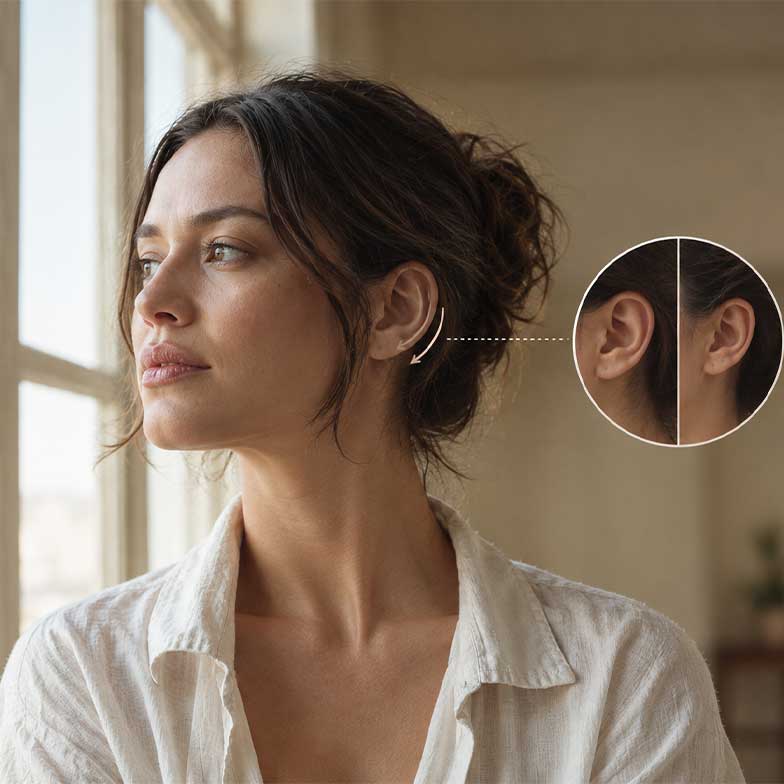
Otoplasty, also called ear pinning or prominent ear correction, reshapes the cartilage of the ear so that ears which stick out sit closer to the head in a natural position. It is performed under general anaesthetic in children and often under local anaesthetic, with or without sedation, in adults, and usually takes one to two hours. The incision is hidden behind the ear. Most people return to school, work and daily life in about a week. The final result settles over about three months.
It is one of the most satisfying operations in plastic surgery, for children and adults alike. It is also an operation where subtlety matters. Ears pinned too flat, or with sharp, unnatural folds, look more obvious than the prominence they replaced. This guide explains what otoplasty involves and how to recognise a good plan.
What otoplasty is — and what it cannot do
Prominent ears are usually inherited and present from birth. They typically come from one or both of two differences in the cartilage:
- An underdeveloped antihelical fold. This is the curved ridge just inside the outer rim of the ear. When it has not formed properly, the upper part of the ear stands away from the head.
- A deep bowl (concha). When the bowl next to the ear canal is large, it pushes the whole ear outwards.
In some people, a prominent earlobe adds to the effect.
Otoplasty corrects these differences. It creates or strengthens the antihelical fold, reduces or sets back the bowl, and repositions the lobe, bringing the ear closer to the head while preserving its natural curves.
Otoplasty does not affect hearing. Prominent ears do not affect hearing, and the operation does not change it.
It does not make ears identical. No two ears are the same before surgery, and small differences remain afterwards.
It is not ear reconstruction. An ear that is severely underdeveloped or absent (microtia), or badly damaged by injury, needs reconstruction, a different and more complex operation.
The most important thing on this page: natural, not flat
The aim of otoplasty is an ear that no longer draws attention, not an ear stuck to the side of the head. A well-corrected ear still sits at a natural angle, keeps its soft curves, and looks like an ear that was never operated on.
Three things matter most:
- Distance and angle. When viewed from the front, the outer rim of the ear should still be just visible behind the antihelical fold. If it disappears completely, the ear looks pinned.
- Balance along the ear. Correcting the middle of the ear more than the top and bottom creates a "telephone ear", where the upper and lower parts stick out and the middle is pressed flat. A good correction is balanced from top to bottom.
- Smooth folds. The new antihelical fold should be soft and rounded, not a sharp ridge.
A good surgeon checks the ears from the front, the back and each side during surgery, and aims for symmetry between them.
Why people consider it
Ears that stick out, noticeable from the front or when hair is tied back.
Teasing or self-consciousness, especially in children and teenagers.
Avoiding hairstyles, sports or photographs because of the ears.
Asymmetry, where one ear sticks out more than the other.
Other ear shapes, such as a folded-over top rim (lop or cup ear), a large ear, or a stretched or split earlobe from earrings.
Children: timing and the child's own wishes
Newborns. In the first weeks of life, ear cartilage is soft enough to be moulded. Custom splints or moulding devices, started ideally within the first few weeks and worn for several weeks, can correct many prominent or misshapen ears without surgery. If your baby's ears stick out, ask your paediatrician or a plastic surgeon early.
From about age 5 to 6. The ear has reached most of its adult size, and the cartilage is still soft enough to shape easily. Otoplasty can be done from this age, often before school teasing becomes an issue.
The child's wish matters. The best time for surgery is when the child is aware of their ears, wants them changed, and can cooperate with the bandage and aftercare. Surgery driven only by a parent's wish is not the right starting point.
In children, otoplasty is performed under general anaesthetic.
Adults
There is no upper age limit. Adult cartilage is stiffer and sometimes needs more shaping. Many adults have otoplasty under local anaesthetic, with or without sedation. Adults also often ask for earlobe repair at the same time.
Techniques
The incision is placed in the crease behind the ear, so the scar is hidden against the head. Occasionally a small incision on the front is needed for specific shapes. Through it, the surgeon uses one or more of these techniques:
Stitch techniques. Permanent stitches placed in the cartilage fold it to create the antihelical fold, or set the bowl back towards the head. Stitch techniques preserve the cartilage and give a soft, natural fold.
Cartilage shaping. The cartilage is thinned, scored or trimmed to weaken it, so that it bends into the new shape. This is used for stiff cartilage, usually in adults, and is often combined with stitches.
Bowl reduction. A crescent of cartilage is removed from a deep bowl, so the ear sits closer.
Earlobe correction. A prominent lobe is repositioned, or a stretched or split lobe is repaired.
Skin removal. A small amount of skin is removed from behind the ear where needed.
"Incisionless" or thread otoplasty. Stitches are placed through tiny punctures without a formal incision. It suits some mild cases in soft cartilage, but it has a higher rate of the ear moving back out over time.
A New Perspective on Otoplasty
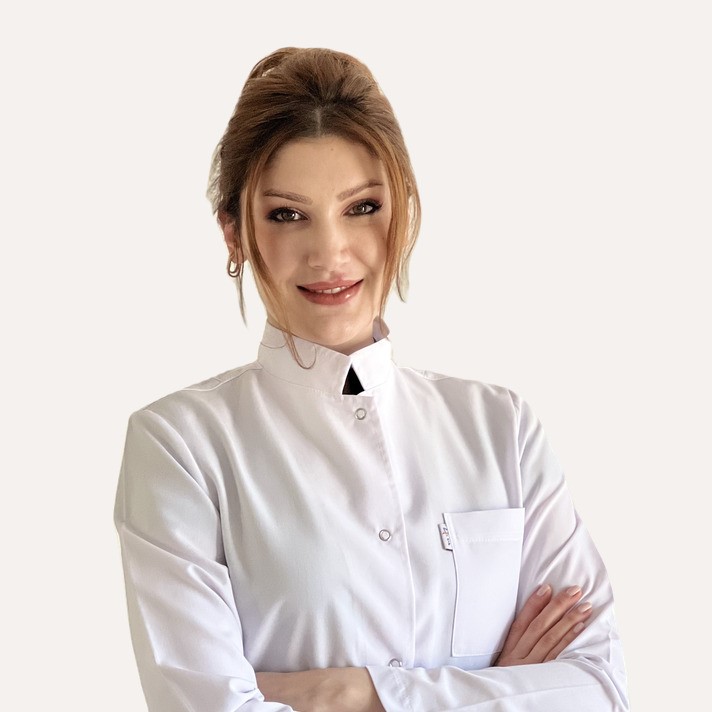
For many years, otoplasty was one of the few aesthetic procedures Dr. Feryal Yıldız deliberately stayed away from, as traditional results often appeared too obvious or surgically altered for her aesthetic philosophy.
Her perspective changed after discovering a refined otoplasty technique designed to create exceptionally natural-looking, untouched results. Impressed by how beautifully the ears could be reshaped while preserving their natural character, she developed a new appreciation for ear surgery.
Today, Dr. Yıldız approaches otoplasty with the same passion she brings to facial and body aesthetic surgery: respecting anatomy, preserving individuality, and creating results that never look “done.”
For her, the goal of natural otoplasty is simple: beautifully positioned ears that look as though they have always been that way.
Who this suits
Otoplasty suits children from about age 5 to 6 and adults of any age who are bothered by prominent or misshapen ears and are in good general health. Adults should not smoke, or should stop well before and after surgery.
Realistic expectations matter most: ears that sit naturally and no longer draw attention, not perfectly identical ears.
Tell your surgeon about any history of raised scarring or keloids, because the area behind the ear is a common site for them in people who are prone.
Who this does not suit
The external ear typically reaches near-complete development at around 6 years of age. For this reason, Dr. Feryal Yıldız generally does not recommend otoplasty before the ear has reached sufficient structural maturity, with timing assessed individually for each child.
The operation and the first weeks
Otoplasty takes about one to two hours, depending on whether one or both ears are treated and on the techniques needed. You usually go home the same day.
After surgery, a padded bandage is wrapped around the head to protect the ears and hold their new shape. It is usually removed after a few days. The ears are sore, swollen and sometimes numb, and pain is usually controlled with ordinary painkillers.
After surgery:
- Keep the bandage on until it is removed at the clinic.
- After that, wear an elastic headband over the ears as instructed, often day and night at first and then at night for about six weeks, so the ears are not folded forward during sleep.
- Sleep on your back for the first weeks.
- Avoid bending, heavy lifting and strenuous exercise for about two weeks.
- Avoid contact sports and anything that could knock or fold the ear for about six weeks.
- Wash your hair only when and how you are told.
- Do not smoke.
Contact the clinic urgently if one ear becomes increasingly painful, or the pain is much worse on one side, especially in the first two days. This can signal bleeding under the skin, which needs prompt treatment to protect the cartilage.
The recovery timeline
Days 1–3. Soreness and swelling are at their peak, with the bandage on.
Days 3–7. The bandage is removed, and the ears are reviewed. The ears look swollen and may be bruised.
Around one week. Most people return to school, work and daily life, wearing a headband.
Weeks 1–2. Stitches are removed or dissolve, and swelling continues to settle.
Weeks 2–6. The headband is worn at night. Light exercise resumes.
Around 6 weeks. Contact sports resume, when you have been cleared.
Around 3 months. The final shape is visible. The scar behind the ear continues to fade over the first year.
How long it lasts
The result of otoplasty is usually permanent. In a small proportion of cases, part of the ear gradually moves back out over the first months, usually because a stitch loosens or the cartilage springs back. A minor revision can correct this.
Risks and complications
No operation is risk-free, and a page that leaves this section out is not worth trusting. The recognised risks of otoplasty include:
Recurrence. Part or all of the ear can move back out, sometimes needing revision.
Asymmetry between the two ears.
Overcorrection. Ears can end up too flat or pinned, have sharp unnatural folds, or show the "telephone ear" appearance.
Haematoma. A collection of blood under the skin needs prompt treatment to protect the cartilage.
Infection, including infection of the cartilage. It is uncommon but needs prompt treatment.
Stitch problems. A permanent stitch can occasionally be felt, work its way through the skin, or cause a small inflamed lump, and it may need removal.
Raised or keloid scars behind the ear, in people prone to them.
Numbness, tenderness or cold sensitivity. These are usually temporary.
Further surgery, for any of the above.
Anaesthetic risks.
If you are travelling to Istanbul for surgery
Patients come to us from the UK, Ireland, Germany, France, the Gulf and elsewhere. Travelling for surgery is a reasonable decision, and it needs more planning than surgery at home.
Assessment. The cartilage shape and the cause of the prominence decide the technique. Photographs are a useful start, but the examination is made in person.
How long to stay. Plan to stay until the bandage is removed and the ears have been reviewed, typically about a week.
Travelling with a child. Bring comfortable clothing that does not need to be pulled over the head, and plan quiet activities for the first days.
Aftercare at home. Arrange who will review the ears once you are home. Health systems in your home country are generally under no obligation to provide routine aftercare or revision for private surgery performed abroad, though they will treat a genuine emergency.
Revision terms in writing. Agree in advance what happens if part of the ear moves back out or needs adjusting: who performs it, where, and who pays.
Your records. Take home your operation note and your discharge instructions.
Choosing a surgeon
Check the qualification, not the adjective. Ask which specialist register the surgeon is on, in which country, and verify it independently.
Ask what is causing the prominence (the fold, the bowl, the lobe or a combination) and which technique that requires.
Ask to see results from the front and the back, at a year or more.
Ask about their revision policy before surgery.
For children, expect the surgeon to speak with your child, not only with you.
Ask who will be operating on the day.
Be wary of pressure. Time-limited pricing or a decision expected on the day suggest that commercial priorities come before clinical ones.
Frequently asked questions
What is otoplasty?
Surgery that reshapes the ear cartilage so that ears which stick out sit closer to the head in a natural position.
What is the best age for otoplasty?
From about age 5 to 6, when the ear has reached most of its adult size, and ideally when the child wants it. There is no upper age limit for adults.
Can a baby's ears be corrected without surgery?
Often, yes, if moulding with a splint starts within the first few weeks of life, while the cartilage is still soft.
Will there be a scar?
The scar is hidden in the crease behind the ear and fades over the first year.
Does otoplasty affect hearing?
No. Prominent ears do not affect hearing, and the operation does not change it.
Is otoplasty done under local or general anaesthetic?
Children usually have general anaesthetic. Many adults have local anaesthetic, with or without sedation.
How long does recovery take?
Most people return to school, work and daily life in about a week. A headband is worn at night for about six weeks.
Is otoplasty painful?
The ears are sore and tender for the first days. Pain is usually controlled with ordinary painkillers.
Is the result permanent?
Usually. In a small number of cases part of the ear moves back out and needs a minor revision.
Can split or stretched earlobes be repaired?
Yes, often under local anaesthetic, alone or together with otoplasty.
Arranging a consultation
If you are considering otoplasty for yourself or your child, the useful next step is a proper assessment. That means an examination of the ear cartilage to find what is causing the prominence, an honest discussion of timing, especially for children, and a clear explanation of the technique recommended and why.
You are welcome to contact the clinic to arrange a consultation with Op. Dr. Feryal Yıldız. There is no obligation to proceed, and you should not be asked to decide on the day.