.svg)
Morpheus8: Radiofrequency Microneedling for Skin Tightening
Morpheus8 combines microneedling with radiofrequency energy to remodel skin from within rather than resurfacing it from above. It improves skin texture and mild to moderate laxity, and it does so without surgery or significant downtime.
It is also frequently oversold. This page explains what the treatment does, what the evidence currently supports, and the point at which it stops being the right answer.
How it works
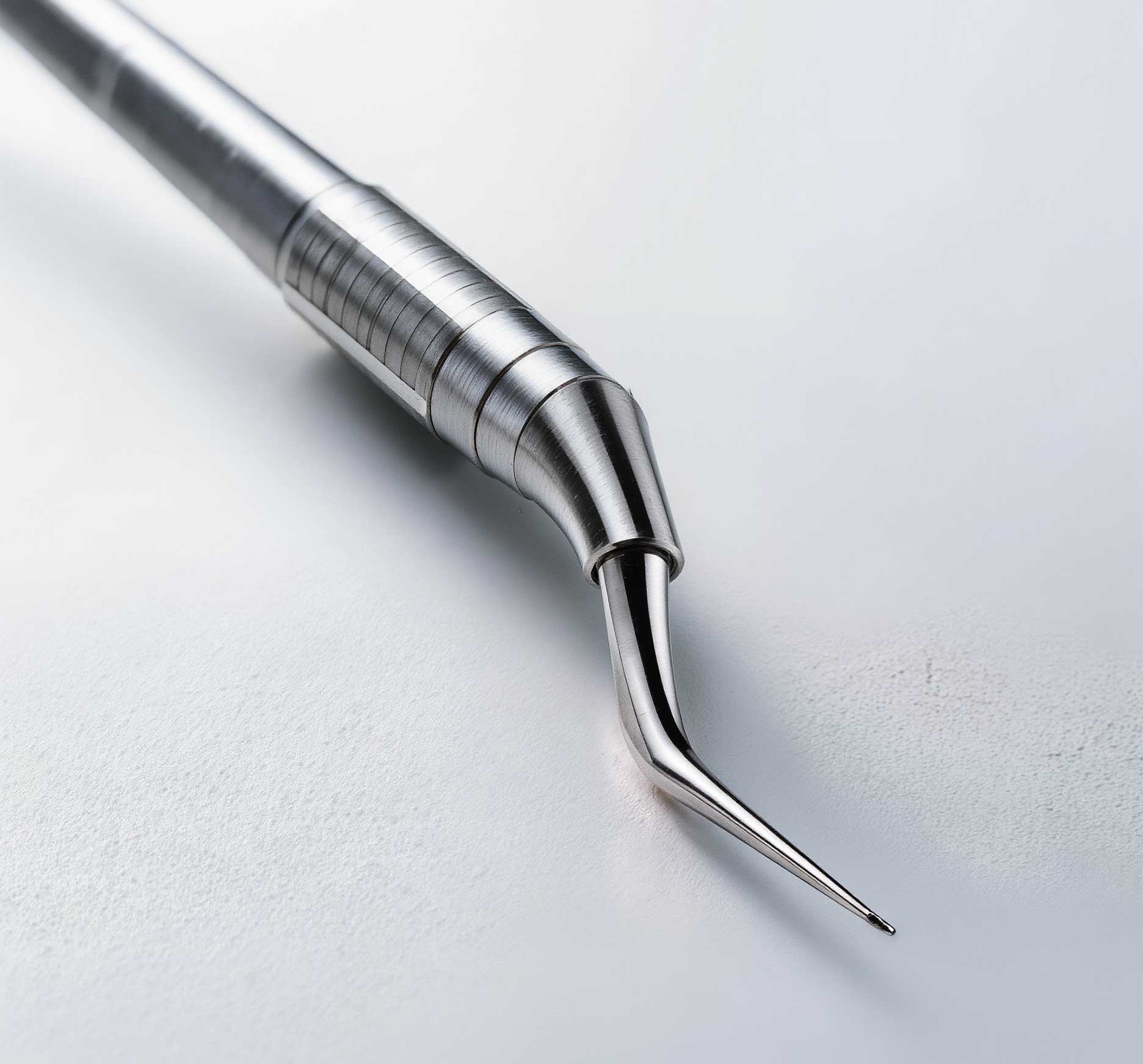
Conventional microneedling creates controlled micro-injuries that trigger collagen production. Morpheus8 adds radiofrequency energy delivered through insulated needles directly into the dermis.
That combination matters. The needles reach a set depth; the radiofrequency then heats the surrounding tissue to a temperature at which collagen fibres contract and the body's repair response is triggered. The skin's surface is largely spared, because the needle insulation keeps the energy where it is wanted. The result is collagen and elastin remodelling in the deeper layers, plus some immediate tissue contraction.
Treatment depth is adjustable and should be set to your skin — more superficial for thin skin, deeper where tissue is thicker. Getting that setting right is the whole skill of the treatment, and it is why who operates the device matters more than which device it is.
What it realistically improves
Published reviews of radiofrequency microneedling support improvement in:
- Skin texture and surface irregularity
- Mild to moderate skin laxity
- Enlarged pores
- Acne scarring
- Fine lines
- Some pigmentation irregularity
Reviewers are also clear about the limits. The evidence base, while positive, is not strong enough to treat the technique as a universal answer for skin ageing. Studies vary widely in device, settings and how outcomes were measured, follow-up is often short, and reporting of the actual treatment parameters has been inconsistent. Reviewers consistently call for longer follow-up and standardised outcome measures before firmer conclusions can be drawn.
The reasonable summary: a well-supported treatment for texture and mild to moderate laxity, with a good safety record, and an evidence base that is promising rather than settled.
Where it is used
Face. Jawline definition, cheeks, nasolabial folds, fine lines, acne scarring, texture and pore size.
Neck and under the chin. Mild laxity and texture. One of the areas patients report most satisfaction with, though expectations need to be modest.
Body. Abdominal skin laxity after pregnancy or weight loss, and upper arms. Results on the body are generally less pronounced than on the face, because the tissue is thicker and the laxity is usually greater.
A note on cellulite: radiofrequency microneedling is sometimes marketed for cellulite. The evidence for that indication is considerably weaker than for texture and laxity, and anyone promising cellulite clearance is going beyond what the data support.
What it will not do
This is the section that determines whether you are satisfied, so it comes before the benefits rather than after them.
It is not a facelift, and it does not approach one. Surgical lifting repositions tissue that has descended. Morpheus8 tightens and improves the quality of skin that is already roughly where it should be. If your jawline has lost definition because tissue has genuinely descended, no energy-based device will restore it — you will spend money and time and be disappointed, and you will still be considering surgery afterwards. An honest assessment will tell you which situation you are in.
It does not replace volume. Loss of facial volume is addressed with fillers or fat transfer. Tightening slack skin over a deflated structure does not restore fullness.
Results are not permanent. Collagen remodelling gives a genuine improvement, but your skin continues to age from the day of treatment onward. Maintenance sessions, typically annually, keep the result rather than extend it indefinitely. Any page telling you the results are permanent is wrong.
It is not a single-session treatment. Most protocols involve three to four sessions, four to six weeks apart. Judge the outcome after the full course, not after the first appointment.
What a session involves
A session takes roughly 30 to 60 minutes depending on area. Topical anaesthetic cream is applied beforehand and left for around 30 minutes. Most people describe the sensation as prickling with warmth and pressure — uncomfortable rather than painful, and more noticeable over bony areas like the forehead and jawline.
Afterwards, expect redness and mild swelling, similar in feel to sunburn, usually settling within 24 to 48 hours. A grid pattern of small marks may be visible for a day or two. Most people return to normal activity immediately, though you may prefer not to plan anything social for the first day.
Collagen remodelling is slow. Early changes appear within a few weeks; the meaningful result builds over roughly three months and continues to develop after that.
Risks, side effects and who should not have it
Common and expected: redness, swelling, mild pinpoint bleeding, tenderness, and temporary dryness or flaking.
Less common: post-inflammatory hyperpigmentation — darkening of treated skin — which is generally self-limiting but is more of a consideration in deeper skin tones. Radiofrequency microneedling is considered relatively safe across skin types because it does not target pigment the way lasers do, but the risk is not zero and should be discussed before treatment if you have a deeper skin tone.
Uncommon: infection, prolonged redness, blistering, marks reflecting the treatment grid, and — where settings are wrong — burns or scarring. These are largely operator-dependent, which is the case for excessive energy or incorrect depth rather than a property of the technology.
The treatment is generally not suitable if you:
- Are pregnant or breastfeeding
- Have an active skin infection, or active acne in the treatment area
- Have taken isotretinoin recently (usually a six-month interval is advised)
- Have an implanted electronic device such as a pacemaker or defibrillator, or metal implants in the treatment area — radiofrequency energy is a specific consideration here and must be disclosed
- Have a history of keloid scarring
- Have an active connective tissue or autoimmune condition affecting healing
Disclose your full medical history and medication list before booking, not on the day.
Before and after your treatment
Before. Stop retinoids and acids for several days beforehand. Avoid sun exposure and any tanning, including self-tan. Come without makeup.
Afterwards. Use high-factor sun protection for at least two weeks — treated skin is more vulnerable to pigmentation change, and sun exposure in this window is the most common cause of a poor cosmetic outcome. Use a gentle barrier-repair moisturiser. Avoid retinol, acids and exfoliants for the first few days, and skip the gym, sauna and hot showers for 24 to 48 hours.
How it compares to the alternatives
Morpheus8Dermal fillerSurgical liftWhat it doesRemodels and tightens tissueAdds volumeRepositions descended tissueBest forTexture, mild to moderate laxityVolume lossEstablished laxity and descentSessionsUsually 3–4One, repeatedOne operationDowntime1–2 daysMinimalWeeksDurationGradual improvement, maintenance advisedAround 6–18 months by productYearsAnaestheticTopicalTopicalGeneral
These are not competitors so much as answers to different problems. Fillers and Morpheus8 are often used together; neither substitutes for surgery once descent is established.
Frequently asked questions
Does it hurt?Topical anaesthetic makes it tolerable for most people. Expect prickling, heat and pressure. Bony areas are more uncomfortable than fleshy ones.
How many sessions will I need?Usually three to four, four to six weeks apart, depending on your skin and what you're treating. This should be estimated after assessing your skin, not quoted before.
When will I see results?Some improvement within weeks; the substantive change builds over about three months as collagen remodels.
How long does it last?The improvement is real but your skin keeps ageing. Most people have a maintenance session around once a year.
Is it safe for darker skin?Radiofrequency microneedling is generally considered suitable across skin types because it does not target pigment. Post-inflammatory hyperpigmentation remains a possibility, so raise your skin tone at consultation so settings and aftercare can be planned accordingly.
Can I have it instead of a facelift?If your concern is skin quality and mild laxity, it may be a reasonable alternative. If tissue has genuinely descended, it is not — and being told otherwise costs you money and time without solving the problem.
Can it be combined with other treatments?Frequently, yes, including with fillers or with surgery in a staged plan. Sequencing and intervals should be planned by the clinician managing your care.
Arranging a consultation
If you are considering Morpheus8, the useful next step is an assessment of your skin — its thickness, quality and degree of laxity — and a straight answer about whether this treatment addresses what is actually bothering you, or whether something else would serve you better.
You are welcome to contact the clinic to arrange a consultation with Op. Dr. Feryal Yıldız.
This page is general information and does not constitute individual medical advice. Suitability can only be determined after assessment. Treatments are for adults only. Morpheus8® is a registered trademark of InMode Ltd.