.svg)
Ultrasonic (Piezo) Rhinoplasty: What It Changes, and What It Doesn't
Ultrasonic rhinoplasty — often called piezo rhinoplasty — is one of the most discussed developments in nasal surgery, and one of the most oversold. It is a genuine advance in how the bony part of the nose is reshaped. It is not a different operation, and it does not transform the recovery from rhinoplasty into something easy.
This page sets out what the technique does, what the published evidence supports, and where the marketing tends to outrun the science.
What ultrasonic rhinoplasty is
Reshaping the nose usually involves cutting and repositioning nasal bone. Traditionally this is done with an osteotome and mallet — precise in experienced hands, but the instrument cannot distinguish between bone and the soft tissue around it.
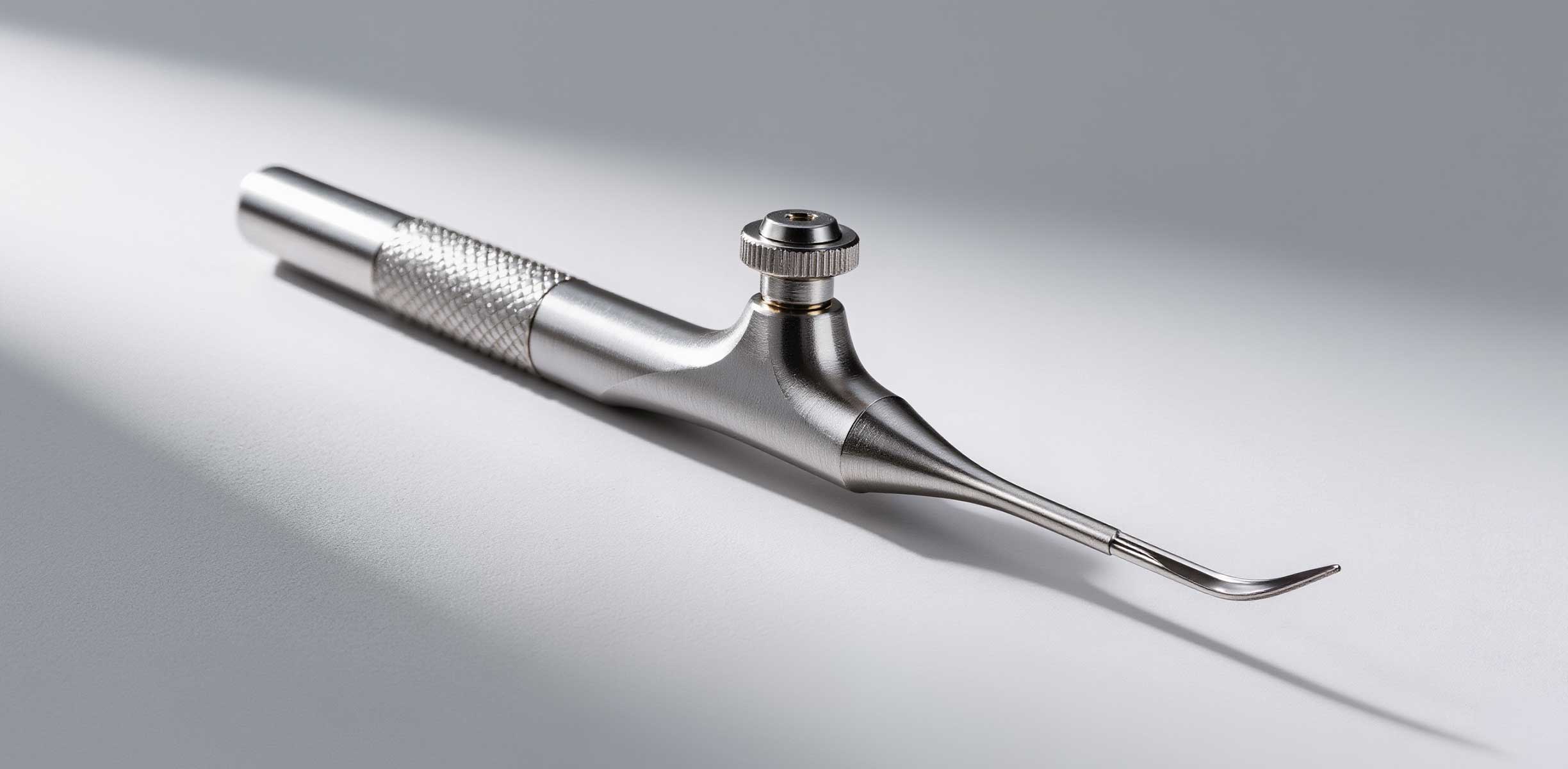
A piezoelectric device works differently. Its tip vibrates at ultrasonic frequency and cuts mineralised tissue while leaving softer structures — blood vessels, mucosa, nerves, cartilage — substantially undisturbed. That selectivity is the whole point of the technology.
In practice this lets the surgeon shape bone gradually and under direct vision rather than fracturing it, refine the bony dorsum in small increments, and sculpt rather than break. For a hump that needs careful reduction, or narrow nasal bones that need repositioning without splintering, that control is meaningful.
What the evidence actually shows
Because this is the part that gets exaggerated, here is a straight account.
Systematic reviews and meta-analyses of randomised trials consistently find that piezoelectric osteotomy reduces swelling around the eyes, bruising, pain and injury to the nasal lining, compared with conventional osteotomy. Those findings are reasonably consistent across studies.
Three qualifications matter, and reputable surgeons state them:
The benefit is concentrated in the first week. The differences show up on the early postoperative days and around day seven. There is very little data on medium and long-term outcomes, and studies have generally not measured what patients themselves report about their results.
The quality of the underlying evidence is modest. The authors of the most rigorous review to date described their own support for piezo as weak, on the basis of the low-quality studies available. That is a statement about the research, not about the instrument — but it means confident claims of dramatic superiority are not warranted.
The comparison depends on what it is compared against. At least one meta-analysis found that piezo's advantage holds against osteotomy performed blind with a chisel, but not against conventional osteotomy performed under direct vision. Much of the benefit attributed to the device may come from working under direct vision rather than from ultrasound itself.
The honest summary: ultrasonic instrumentation offers a real, measurable, early-recovery advantage, most clearly against older blind techniques. It is a refinement, not a different category of operation.
What ultrasonic rhinoplasty does not change
This section matters more than the advantages, because expectations set here determine whether you are satisfied later.
It only affects the bone. Roughly the lower third of the nose — the tip, the nostrils, much of what determines whether a nose looks natural — is cartilage and soft tissue. Piezo instruments are not used there. If your concern is tip shape or projection, the instrument used on your nasal bone is largely irrelevant to your result.
It does not shorten the real recovery timeline. The cast or splint comes off at around a week whatever instrument was used. Most people are presentable in public within one to two weeks. But nasal tip swelling resolves slowly regardless of technique, and the final shape of a nose is generally judged at twelve months, sometimes longer in thick-skinned patients or revision cases. Anyone quoting a five-day recovery is describing being able to leave the house, not being healed.
It does not make the operation risk-free. Bleeding, infection, breathing difficulty, asymmetry, irregularities of the bridge, changes in sensation, and the need for revision surgery are all possible after rhinoplasty. Published revision rates for rhinoplasty sit in the range of roughly five to fifteen per cent across the literature, and no instrument eliminates that.
It does not substitute for the surgeon. A piezo device in inexperienced hands produces a worse result than an osteotome in skilled ones. The instrument is a tool, not a qualification. Choose the surgeon first and ask about instruments second.
Ultrasonic and conventional rhinoplasty compared
Conventional osteotomyUltrasonic (piezo)How bone is shapedOsteotome and malletUltrasonic vibrationSoft tissue around the cutLess selectiveLargely sparedEarly bruising and swellingMore, on averageLess in the first weekNasal lining injuryMore commonLess commonOperating timeShorter in some studiesSimilar or slightly longer; studies disagreeEffect on tip and cartilage workNoneNoneTime to final resultAbout 12 monthsAbout 12 monthsCostStandardTypically higher
The bottom two rows are the ones usually left out of comparison tables, and they are the ones that determine how satisfied you'll be a year from now.
Who it suits
Ultrasonic instrumentation is most useful where meaningful work on the nasal bone is needed:
- Reduction of a bony hump on the bridge
- Narrowing or repositioning of wide nasal bones
- Revision surgery, where previous work has left irregular or unpredictable bone
- Patients with thin skin, where small bony irregularities show through more readily
- Cases where preserving the nasal lining is a particular priority
It offers less where the work is mainly on cartilage — tip refinement alone, for instance — and it is not necessary in every case. A surgeon who recommends it for every patient regardless of anatomy is describing a marketing position rather than a surgical plan.
Preparing for surgery, and the weeks afterwards
Before. Stopping smoking at least four weeks beforehand materially affects healing and tissue blood supply; this is one of the few things genuinely within your control. Disclose all medications and supplements, particularly anything affecting clotting. Expect a physical examination — the bone and cartilage structure of your nose cannot be assessed from photographs.
The first week. Sleep with your head elevated. A splint is usually worn for about seven days. Swelling and bruising peak in the first two or three days and then begin to settle.
Weeks two to six. Avoid glasses resting on the bridge, contact sports, heavy lifting and strenuous exercise while the bone stabilises. Protect the skin from strong sun.
Months three to twelve. The bridge settles first; the tip last. Small changes continue for a long time. Patience is part of the treatment, not a consolation for it.
If you are travelling to Istanbul for surgery
Patients come to us from the UK, Ireland, Australia, Germany, France and elsewhere. That is a reasonable decision, and it needs more planning than surgery at home.
Flying. Surgery and long-haul flights each raise the risk of deep vein thrombosis and the combination compounds it. Plan enough time in Istanbul afterwards rather than flying home immediately, and follow the mobility advice you're given. Nasal congestion also makes pressure changes uncomfortable in the early days.
Aftercare at home. Splint removal, wound review and follow-up are part of treatment, not extras. Establish before you travel who will provide them. Health services in your own country are generally under no obligation to provide routine aftercare or revision for private surgery performed abroad, though they will treat a genuine emergency.
Revision terms in writing. Rhinoplasty has one of the higher revision rates in aesthetic surgery, and revisions are typically assessed at twelve months. Agree in advance, in writing, what happens if you need one: who performs it, where, and who pays.
Recovery is not a holiday. Sun, alcohol, swimming and sightseeing in the days after surgery all work against healing. A surgical trip and a holiday are different things.
Your records. Take home your operation note and discharge instructions. Any surgeon who treats you later will need them.
Frequently asked questions
Is ultrasonic rhinoplasty less painful?Studies do show lower reported pain in the early days after surgery compared with conventional osteotomy. Rhinoplasty is generally described as uncomfortable rather than severely painful either way — congestion and pressure tend to bother people more than pain does.
How soon can I go back to work?The splint usually comes off around day seven, and many people return to desk work in the second week. You will still be visibly swollen. Physical work and exercise take longer.
Does it produce a better-looking nose?There is no good evidence that it changes the aesthetic result. It changes how the bone is worked and the first week of recovery. The result comes from surgical planning and judgement.
Is it more expensive?Often, yes — the equipment costs more. Whether that is worth it depends on how much bone work your case involves. For a mainly cartilage-based case, the premium buys you little.
Can it fix breathing problems?Functional problems such as a deviated septum are addressed by septoplasty, which can be performed in the same operation. The instrument used on the bone is separate from whether functional work is done.
Is it suitable for revision surgery?It is often particularly useful in revision cases, where previous surgery has left bone that behaves unpredictably and gradual, controlled shaping is an advantage.
How long until I see the final result?About twelve months for most people, longer for thicker skin or revision cases. This is not shortened by the instrument used.
Arranging a consultation
If you are considering rhinoplasty, the useful next step is an examination and a discussion of what your bone and cartilage structure will support — including whether ultrasonic instrumentation is relevant to your case at all.
You are welcome to contact the clinic to arrange a consultation with Op. Dr. Feryal Yıldız. There is no obligation to proceed, and you should not be asked to decide on the day.
This page is general information and does not constitute individual medical advice. Suitability for surgery can only be determined by a qualified surgeon after examining you. Surgery is for adults; we do not provide cosmetic procedures to people under 18.